Step inside the Potash Pilot Plant: Nutrien’s testing ground
Tucked into the city of Saskatoon’s research district near the University of Saskatchewan, the Potash Pilot Plant has a significant impact on how Nutrien mines potash safely and effectively.
It’s part of local history dating back to the 1980’s. An older facility, not sitting collecting dust – just layers of salt from handling potash.
The team here focuses on scientific research, testing, process control and operational technology – work they do above ground that directly impacts colleagues more than three thousand feet beneath the soil. In fact, all full-time employees at the Potash Pilot Plant start their careers at a potash mine, which brings depth of experience and knowledge.
“I’ve been with Nutrien over 19 years,” says Courtney Rohachuk, Manager, Potash Pilot Plant. “I went to university for chemical engineering here in Saskatchewan, and my first job was at the Lanigan potash site as a process engineer.”
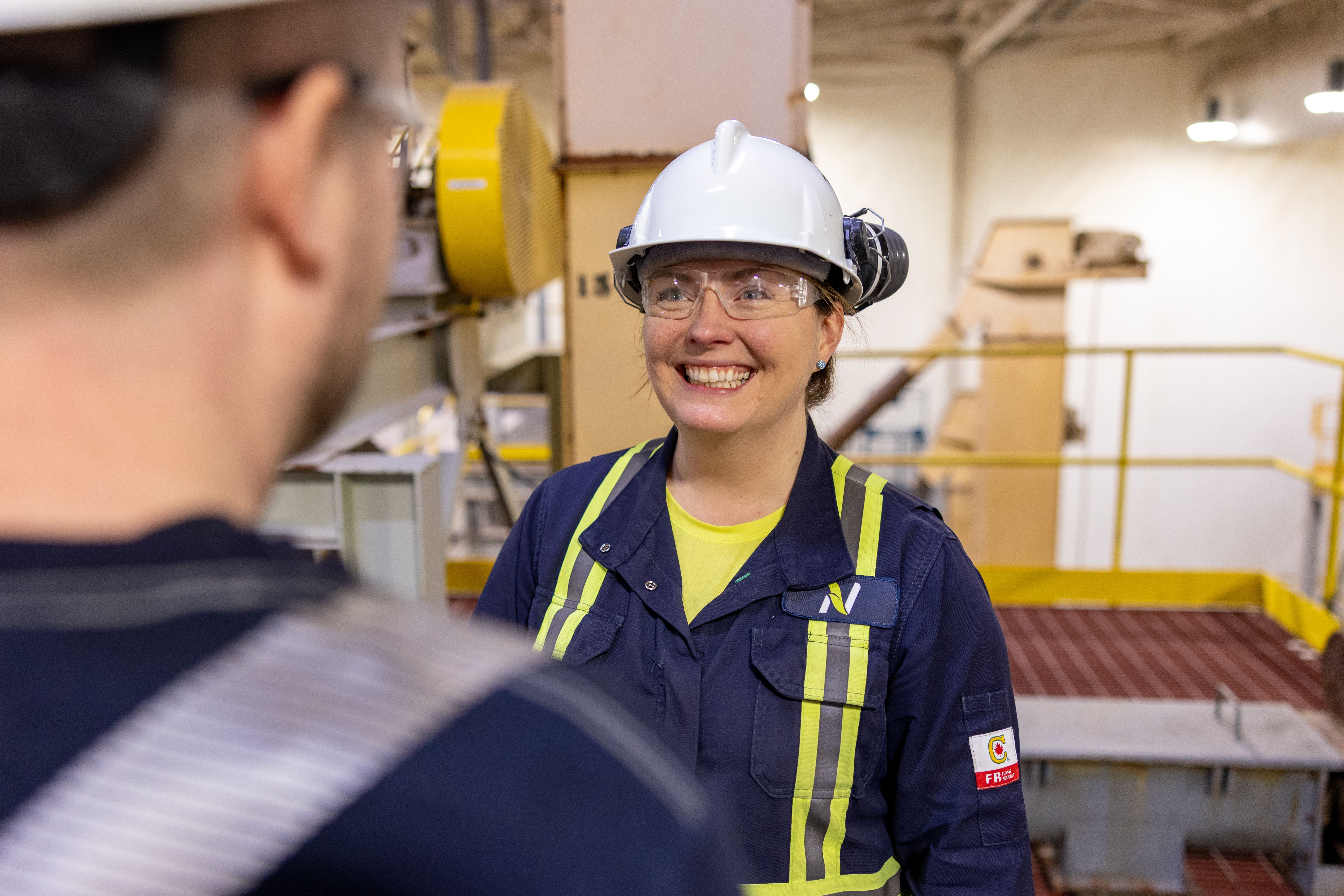
Pictured: Courtney Rohachuk, Manager, Nutrien Pilot Plant
Their days are spent looking for practical and relevant ways to support potash sites, while continuing to innovate.
Each of Nutrien’s six potash mines in Saskatchewan is a unique environment – not one is exactly alike. The right information based on good research and testing is what evolves capabilities on site where potash production runs 24/7.
Test here. Run it there.
Testing allows teams to answer a critical question: not just will this work, but will it add value?
It’s not just about improving performance but making sure everything about a site’s needs is understood completely, and that those needs are met. Something new doesn’t reach an operating mine until it is rigorously tested, because safety comes first.
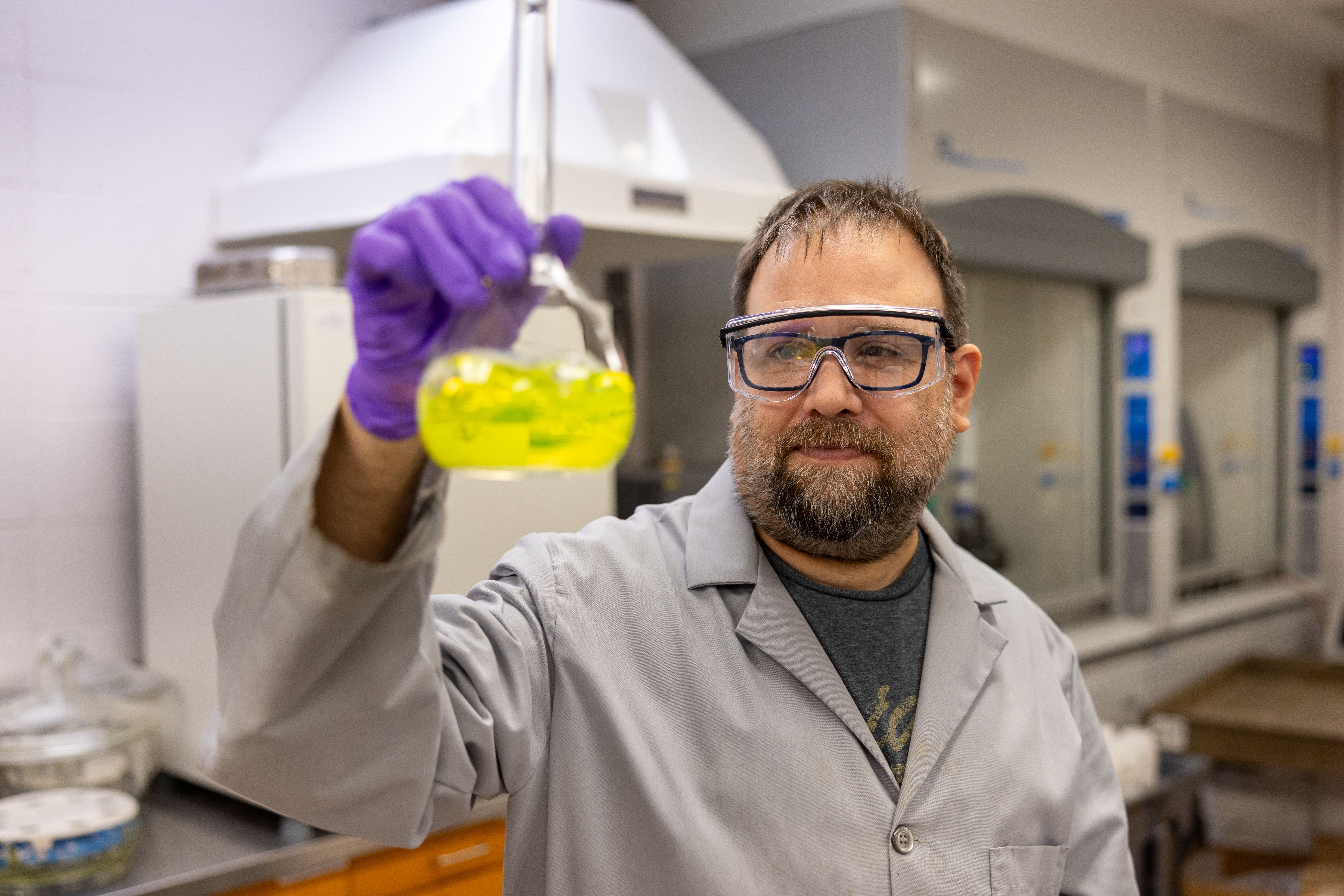
Pictured: Dan Beazley, Lab Specialist
“It’s never dull because there’s such a wide variety of projects that we get to work on that keeps it exciting,” says Courtney.
One of the most interesting features about the Potash Pilot Plant is elements of the past, present and future, all under one roof. For example, the decades old small-scale mill and compaction circuit. It’s the only original circuit from days gone by – but still in use on occasion to process small amounts of potash.
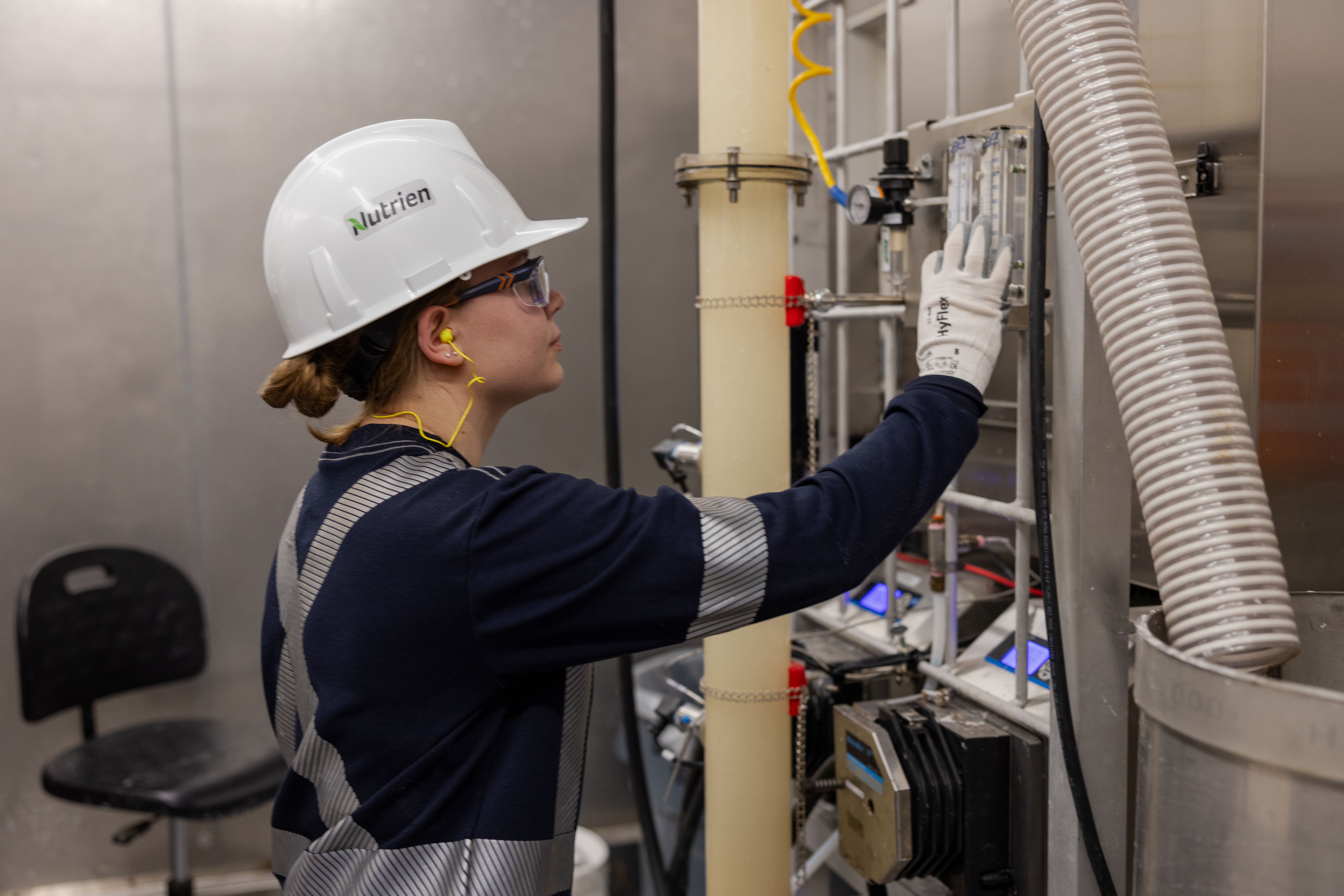
Pictured: Sarah Larochelle, Coop Student, Process Engineer
More often, the team here uses other tools, equipment, and machines to run flotation tests, which separates potash from salt and clay. They study the behavior of ore, and test how processing agents interact with equipment – because chemistry and machinery must work together for potash production to succeed. The team is constantly learning, adjusting, re-testing, and sharing results.
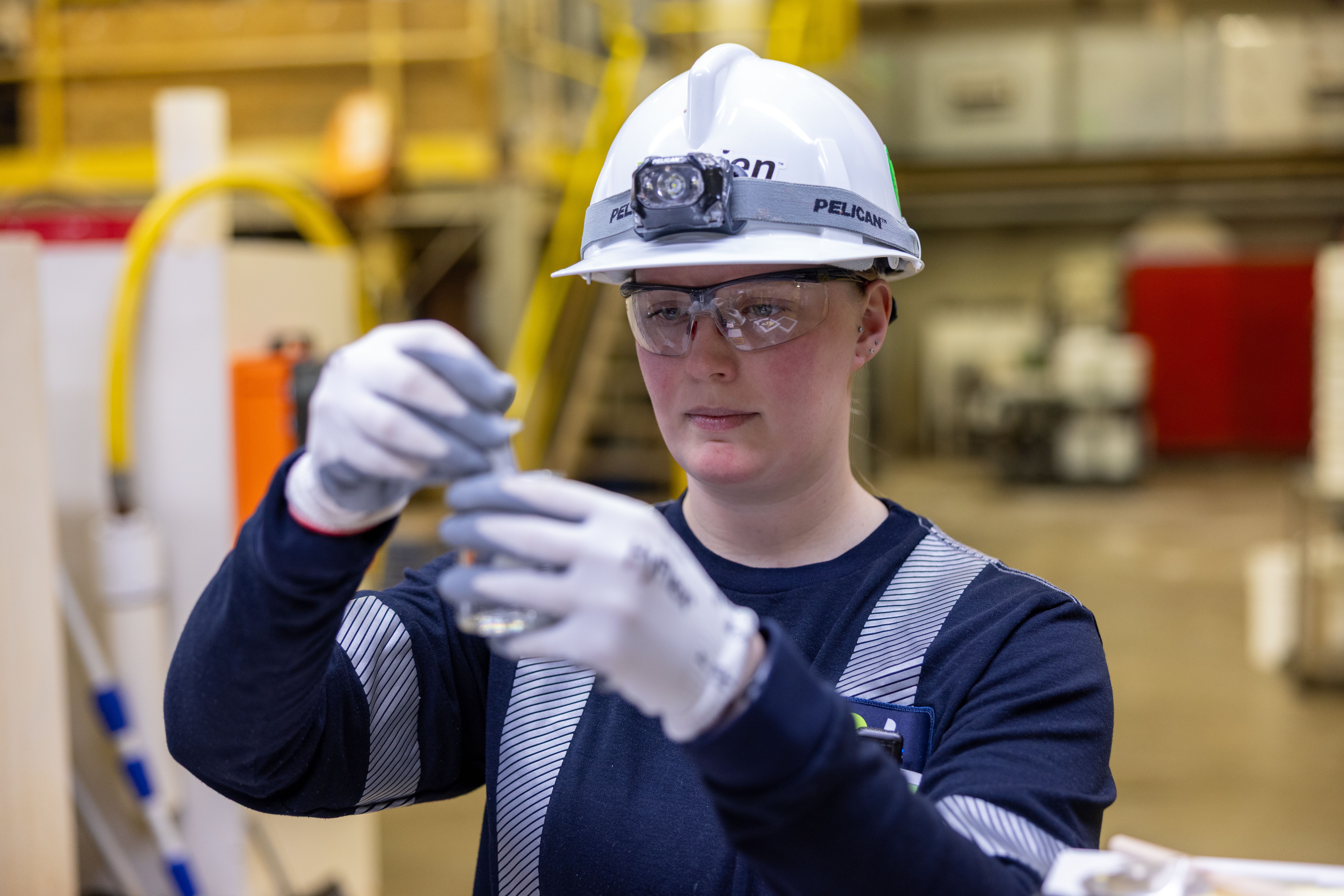
Pictured: Lauren Van Dyke, Process Engineering Technician
“By evaluating some of those things here at the pilot plant, we can understand impact and what will be useful,” says Courtney. “Potash processing is such a niche industry, there's not many in the world. Sometimes technology that works great in other mineral process industries doesn't necessarily work in potash.”
And then there are new capabilities that are ushering in the next generation of potash production.
Simulation Room
Technology and equipment support people at every potash site to do their work safely and efficiently. One of the most unique areas is the Process Control Chamber – a simulation room. The work done here focuses on advancing reliability with high-predictability, optimizing process control, and operational technology. The key benefit of the simulation area is matching mine environments precisely in a low-risk environment for testing.
The room hosts a web of complex systems capable of running controlled simulations. Experts in this area compare it to human anatomy with different parts that do different things while also working in tandem.
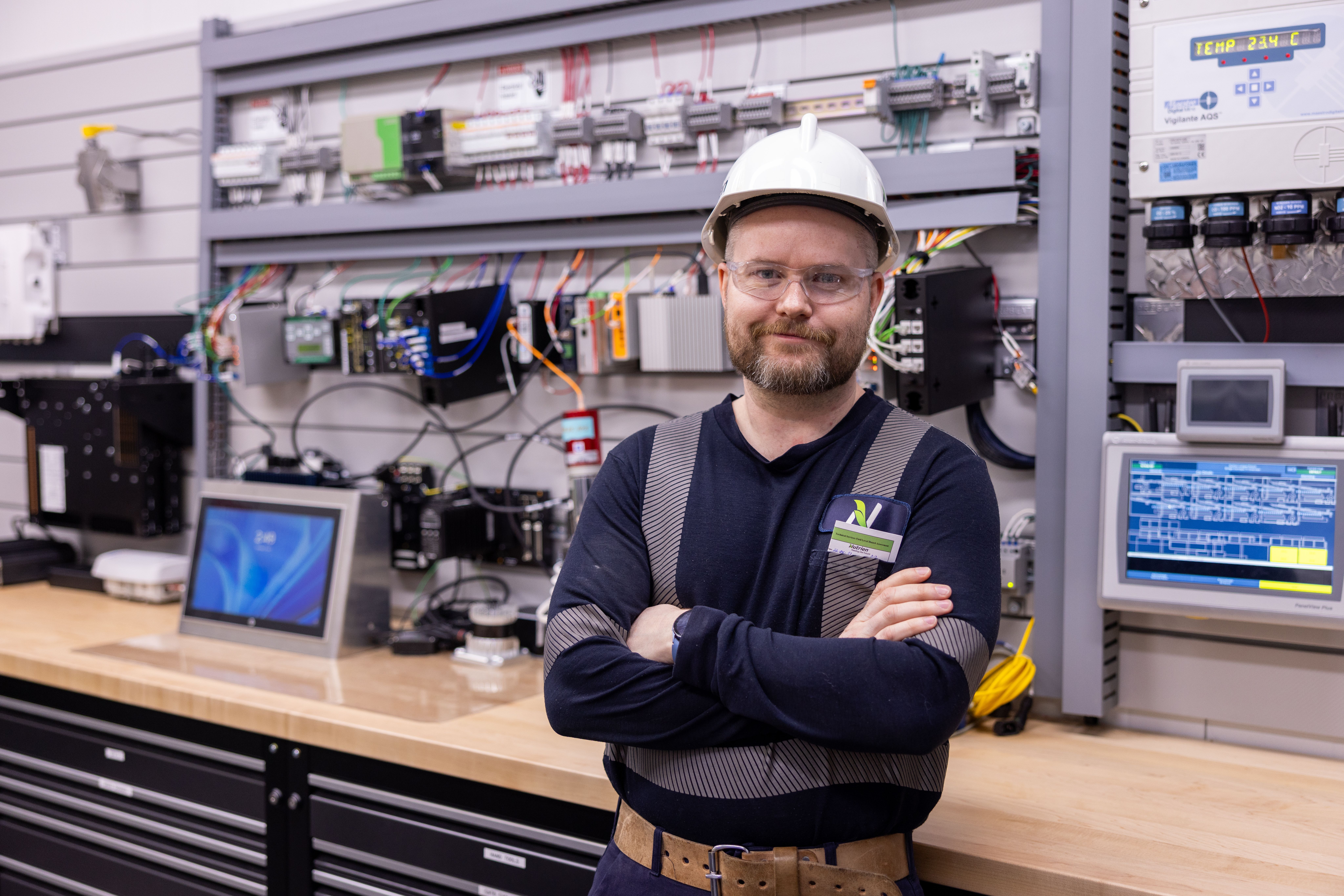
Pictured: Matthew Gillespie, Manager, Process Control & Operational Technology
A difference you don’t always see
“We have lots of different equipment – crushers, float cells, boring machines, hoists, all that stuff – you can think of those as your hands and feet,” says Matthew Gillespie, Manager, Process Control and Operational Technology. “Equipment infrastructure makes those parts run and moves energy.”
“They're directly connected through sensors and control elements, so they're starting and stopping motors, opening and closing valves, processing the world around it, such as a level sensor or a vibration,” says Matt. “That all feeds into this control system or the ‘brain’ and we use that to optimize the process.”
Matt’s team can simulate a specific mine and any system in its environment, from mill to underground operations, ensuring systems act as they would on site. Then, the team can run scenarios, gather data, and critical information that can lead to further innovation and improvements – to the benefit of potash operations and teams.
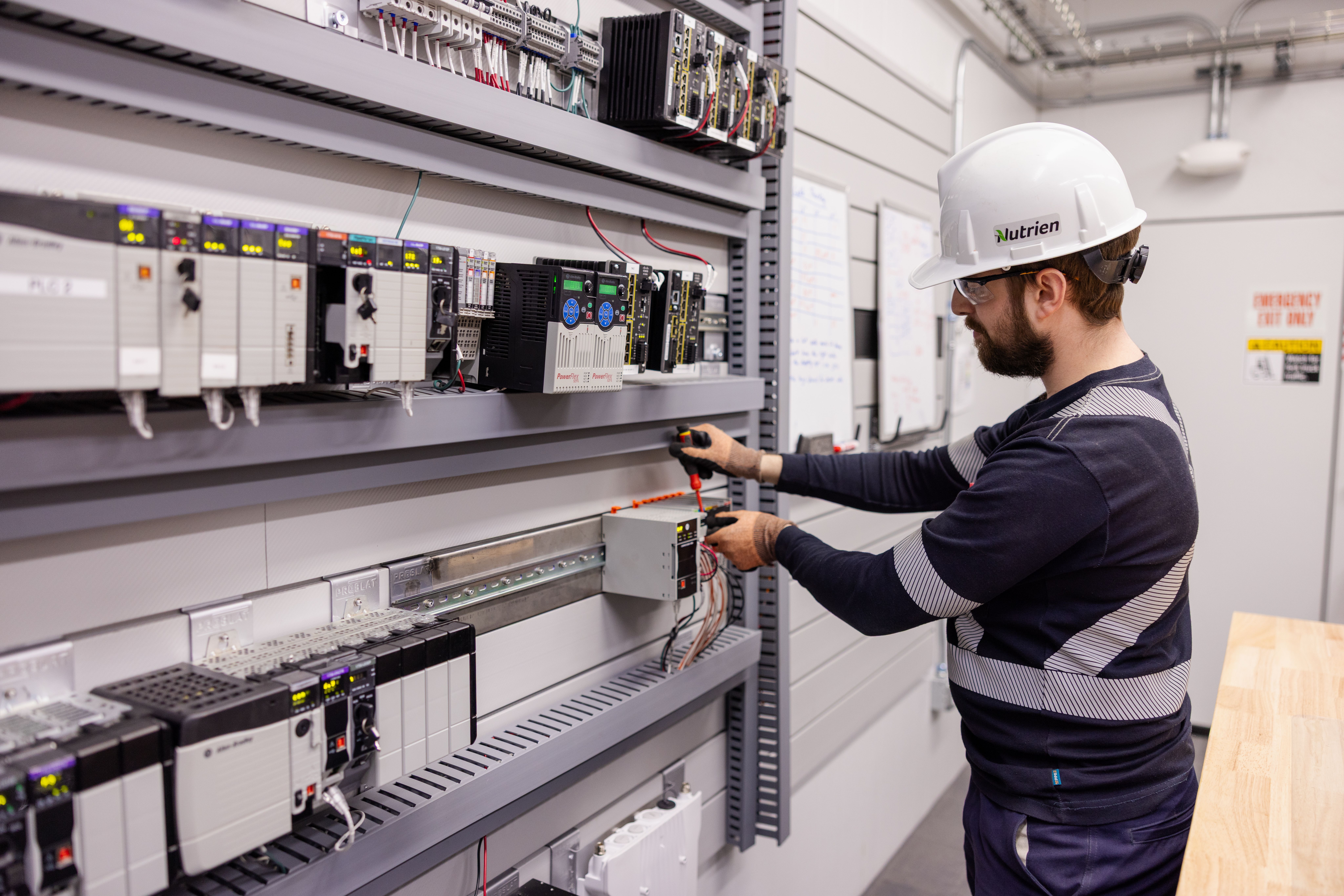
Pictured: Jordan Himmelsbach, Process Control Engineer
Once a successful program can be brought safely into a live mine environment, it leads to higher effectiveness while supporting teams to do their work differently, in a safe manner with technology they can count on.
Meaningful work. Dedicated people. Feeding the future.
Ask anyone at the Potash Pilot Plant what makes their day, and the answer is consistent: it’s the people – those they work with in testing and their peers at Nutrien’s potash operations. That connection shapes how they approach everything.
“I have a huge passion for people and the opportunity to lead, plus I get to still be in the technical weeds – I feel I have the best of both worlds,” says Courtney.
Helping their teams at site to produce high-quality potash in a safe and effective manner has lasting impacts that reach beyond Nutrien.
“The safer we are, the more efficient we are, and it means we can get our product out to farmers who need it, when they need it,” says Matthew.
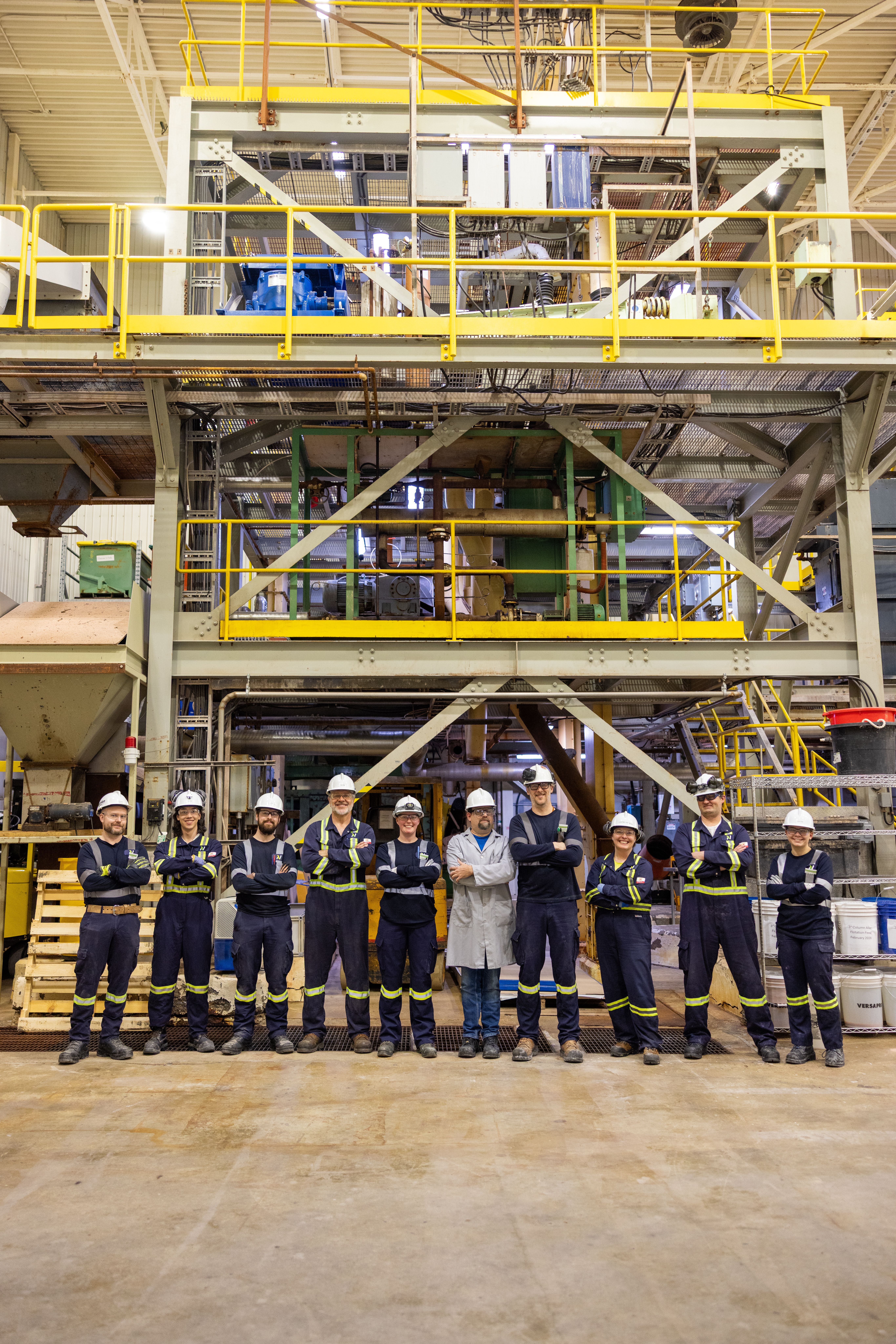
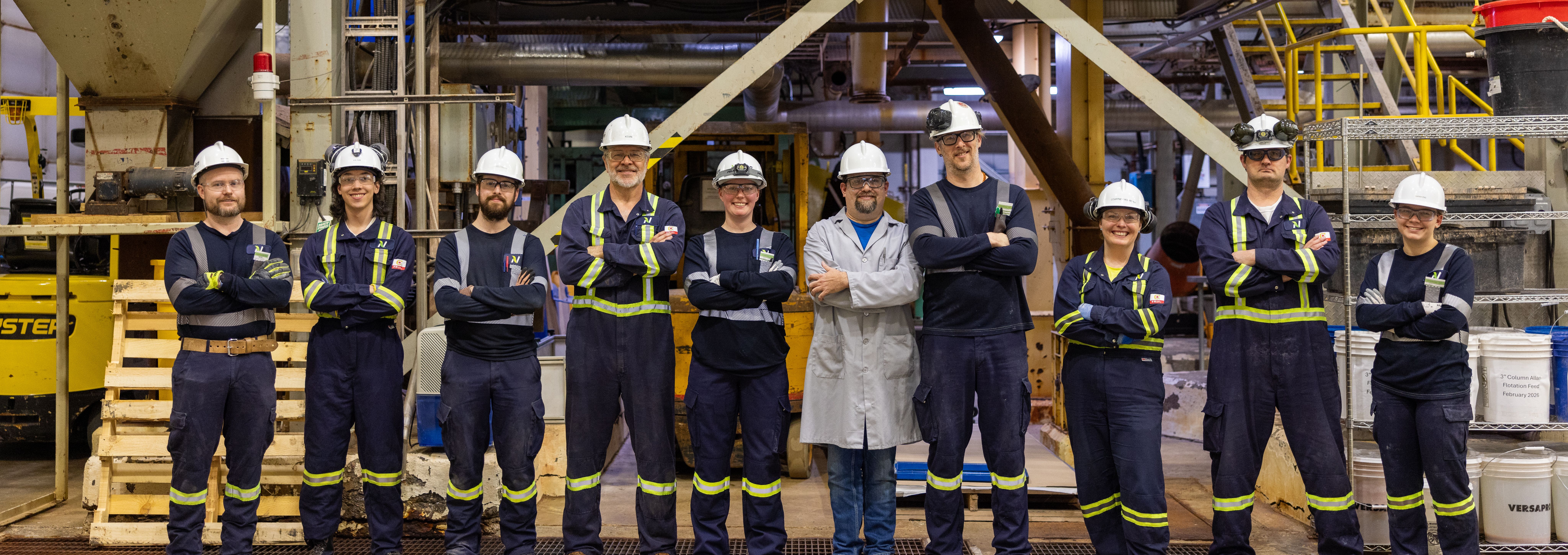
Pictured: Potash Pilot Plant team in front of the mill and compaction circuits
From site to farm to dinner table – potash production starts long before the mineral leaves the mine, in places like the Potash Pilot Plant.
Related stories