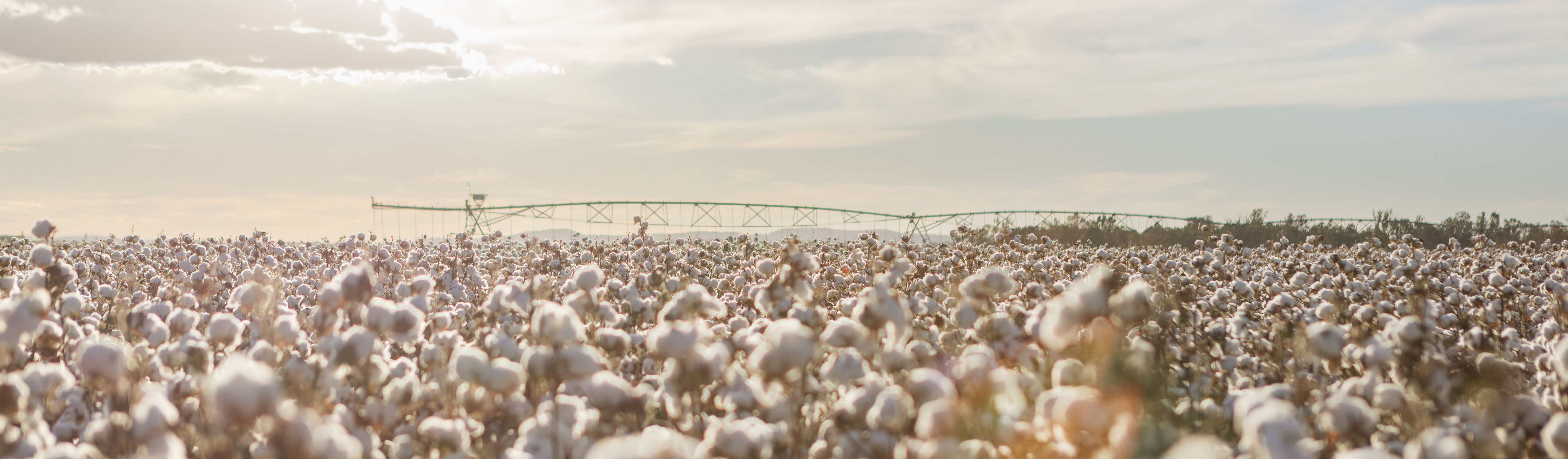
Small but mighty: How Australian cotton continues to ‘kick goals’
Australia might produce only a small percentage of the world's cotton, but its reputation on the global stage remains significant.
Grown in a climate that demands innovation and strategic thinking, Australia produces some of the finest quality cotton in the world.
This is due to superior varieties, suitable natural environment, efficiency of farmers and why, according to Australian Cotton, the country sells every bale produced every year.
Nutrien Customer and Gunnedah Cotton grower James Barlow has been growing cotton for the past 10 years and says it has been a significant contribution to the success of his business.
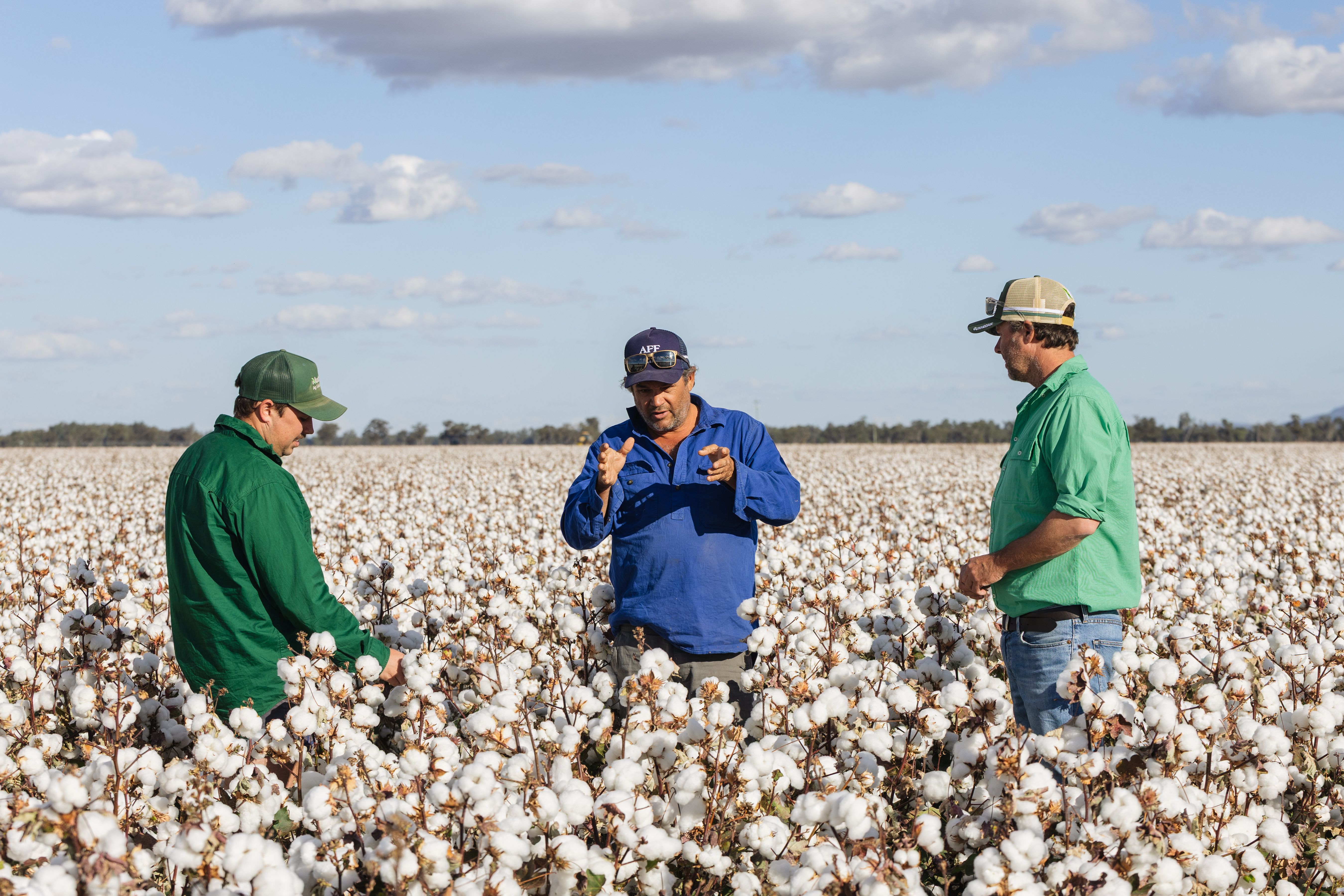
Pictured: Nutrien Customer and Cotton Farmer James Barlow (centre) with Gunnedah Agronomist’s Gibson Cansell (left) and Duncan Hill (right)
“I have access to water, so cotton fits well with the irrigation program on the property. The return margins have been good and the weed control it brings has also been great to clean up some of the tough weeds,” Mr Barlow said.
“We’re also lucky to be able to double crop into the cotton country where we can plant winter crops in the same year.
“There’s been a lot of stigma around cotton in the past but growing it more sustainably has been a big focus over the last few years.
“It’s a natural fibre so I hope more and more people are turning to cotton when it comes to what we wear because I believe what we produce here in Australia is truly a great product.”
Perfect picking conditions
A warm, dry Autumn made for almost perfect picking conditions in 2026 with the Australian Cotton Shippers Association (ACSA) reporting average yields of around 12–14 bales per hectare and top quality across the regions.
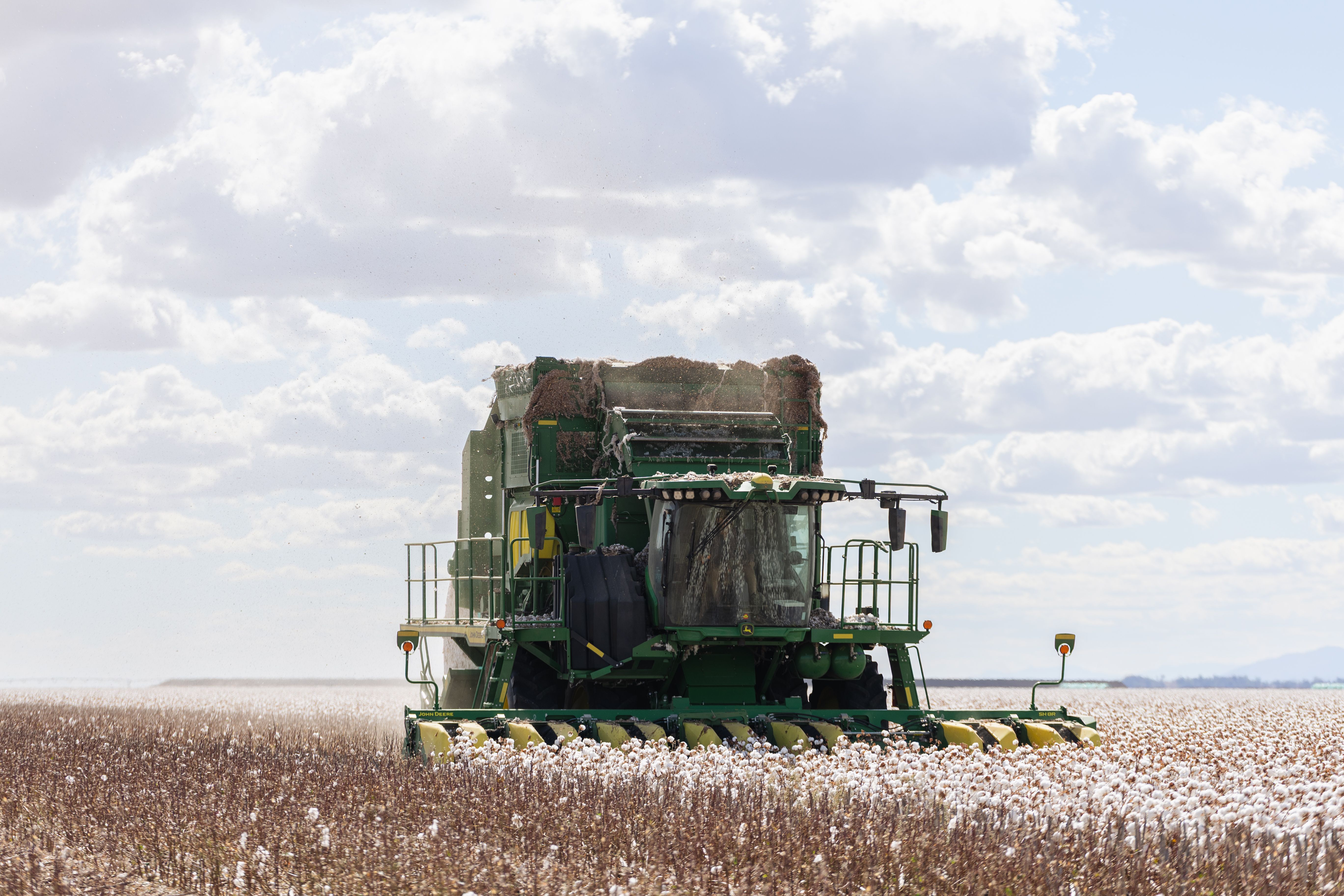
Pictured: A cotton picker in action at Gunnedah, NSW, Australia
“Quality continues to be a standout and grade continues to be as good as we have ever seen,” the ACSA reported.
“Length and strength are also excellent. Micronaire (fineness and maturity) is still higher than average but starting to show signs of coming down as we move into later-picked cotton, which is consistent with seasonal expectations.”
The ACSA Chair Arther Spellson has gone as far to say “overall, the 2026 crop remains one of the highest-quality Australian cotton crops ever produced.”
A reputation built on quality
Australian cotton may account for only a small share of global production but its reputation for quality continues to drive strong demand from international buyers.
After back-to-back seasons of strong supply weighed on global pricing, a reduction in planted area and production across the world looks supportive of market prices for the remainder of 2026 and beyond.
“Climate variability continues to challenge Australian cotton growers but improving water efficiency remains a key path forward,” Nutrien Market Insights Lead Ethan Woolley said.
“Expectations of tighter global supply and the rapid increase in synthetic and alternative fibre prices are also supporting manufacturing demand for cotton.
“Interest rates across much of the developed world remain lower than Australia, supporting consumer spending and investment, which may help boost retail demand of Australia cotton.”
A sustainable fibre
As brands, retailers and consumers place greater importance on traceability and sustainability, Australia’s cotton industry continues to demonstrate strong environmental stewardship.
Its commitment to improve management practices date back to 1991, when it became the first sector in Australian agriculture to independently assess its environmental impact.
Today, every bale of Australian cotton also comes with a unique identifier barcode that can trace the bale back to where it was ginned, and the area it was grown.
“The cotton industry is one that is probably envied against others in Australia in the fact that it’s kicked so many goals in and around sustainability and water usage with yields still increasing,” Nutrien Gunnedah Agronomist Mark Goddard said.
“It’s a small industry here in Australia with a smaller number of growers but it’s very proactive and it doesn’t walk away from challenges and I think appreciation for Australian cotton will only continue to grow.”
This appreciation could increase potential for consumers to pay a premium for high quality sustainably sourced cotton, which could support a shift in demand away from synthetic fibres.
Related stories