The Ocean Beneath: 400 Million Years of Geology Behind Saskatchewan’s Potash Story
Long before wheat fields stretched across the Canadian prairies, before the first bison crossed the plains and more than 150 million years before dinosaurs roamed the Earth, an ancient inland sea covered much of what is now the province of Saskatchewan.
Today, evidence of that prehistoric world sits nearly a kilometre beneath the surface and plays a role in helping grow crops around the globe. Millions of years after the sea disappeared, it left behind one of Saskatchewan's most remarkable natural resources: potash.
Potash is a source of potassium, one of the key nutrients crops need to grow and thrive, making it essential to modern agriculture. In Saskatchewan, it occurs as the mineral sylvite, often found alongside halite, or rock salt, and can range in colour from white to pink or orange depending on its composition.
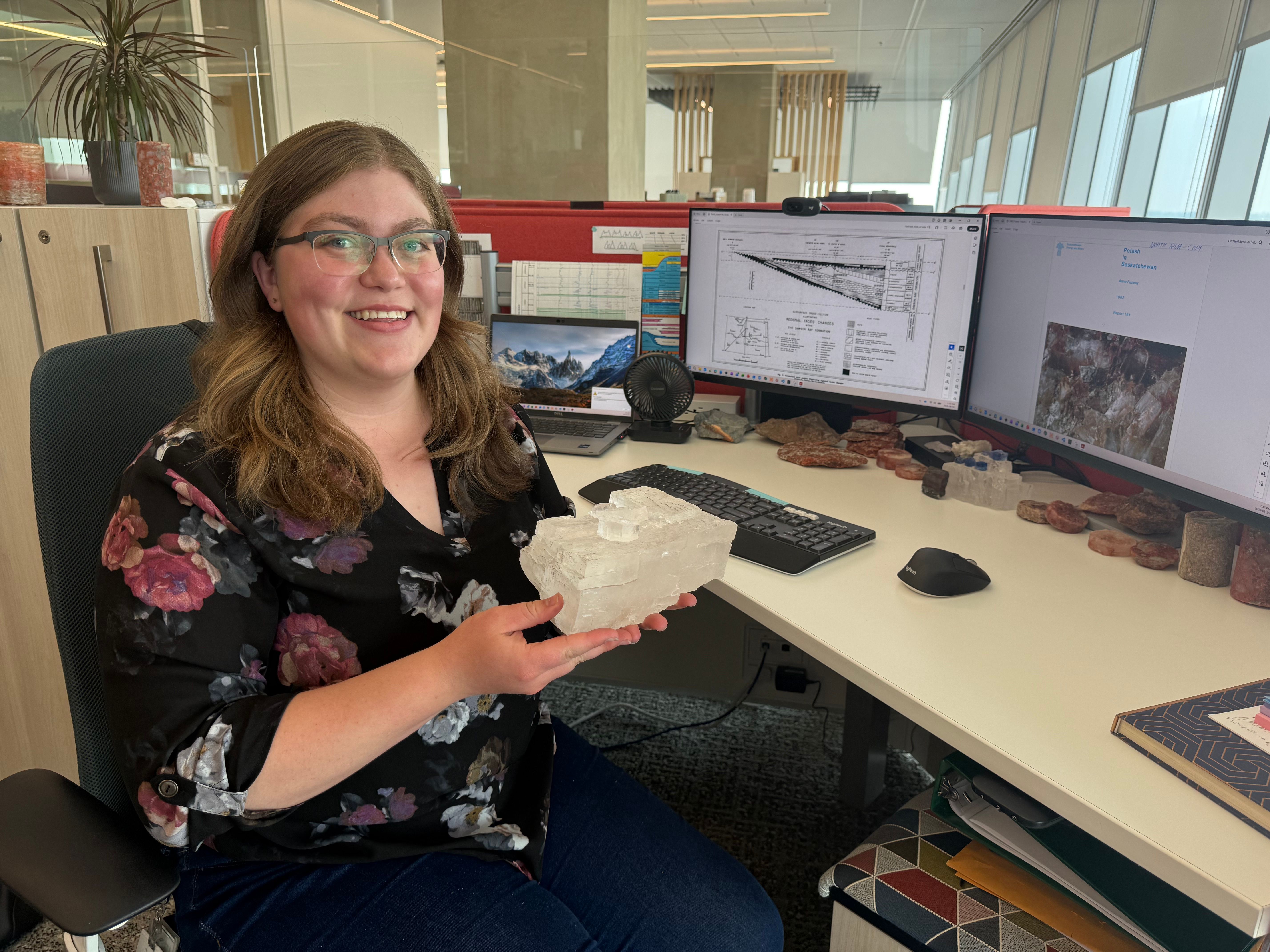
Pictured: Willow Neufeld, Geology Student and Nutrien Intern
"Potash formed before dinosaurs roamed the Earth, about 150 million years before dinosaurs," says Willow Neufeld, a geology student from the University of Saskatchewan who recently completed an internship with Nutrien. "Saskatchewan has been covered by forests, oceans and glaciers, and everything in between."
For many people, Saskatchewan is synonymous with prairie landscapes and agriculture. Nearly 400 million years ago, however, the province looked dramatically different.
A tropical Saskatchewan
When Saskatchewan's potash deposits were forming, the region sat much closer to the equator. Warm, shallow seas covered much of the landscape, creating the conditions needed for potash to form.

Pictured: Inside Nutrien’s Rocanville potash mine
Over millions of years, repeated cycles of evaporation and recharge concentrated minerals within a large inland basin, gradually creating the deposits found beneath Saskatchewan today.
While the potash itself contains no fossils, the rock layers above it provide a window into the environment that once existed here.
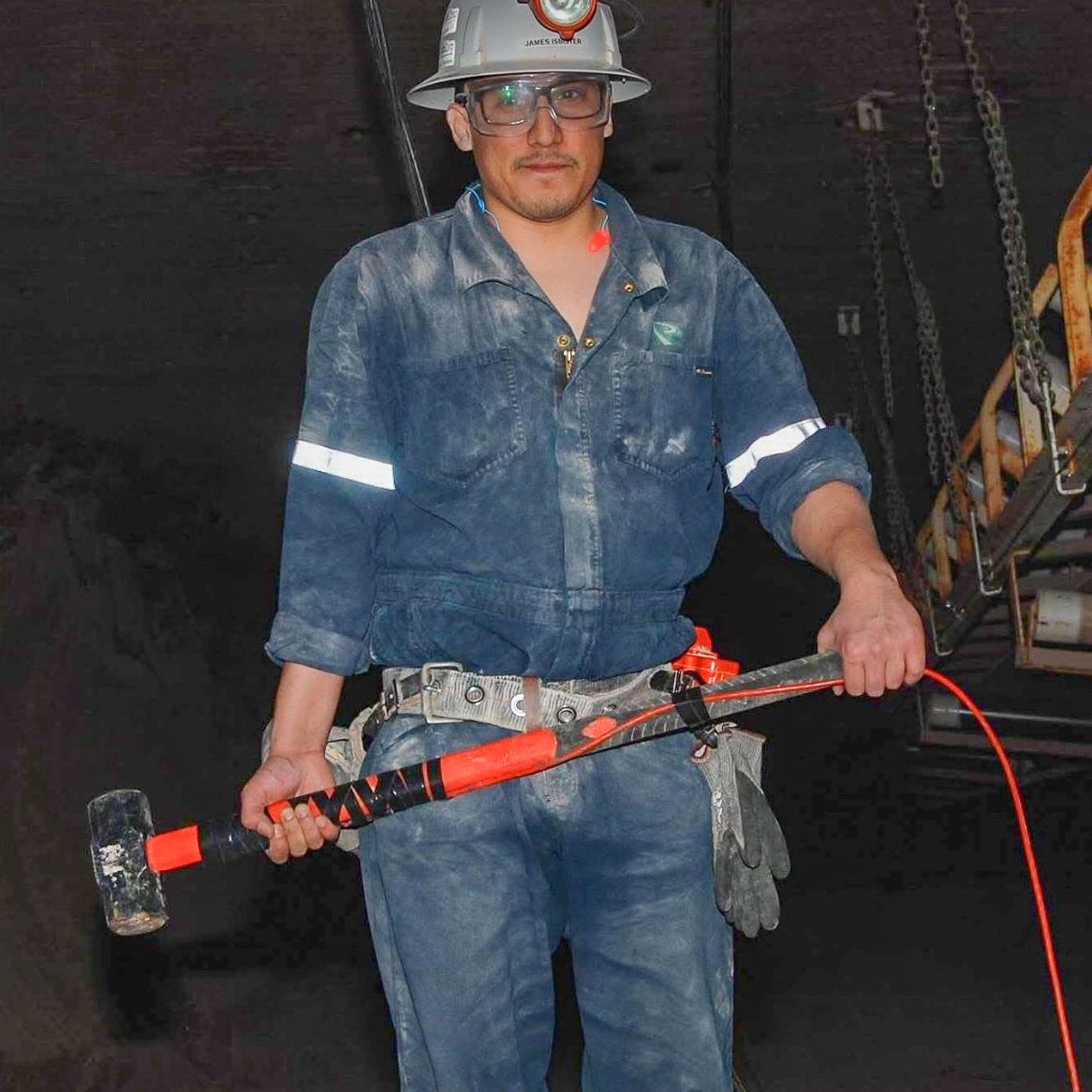
Pictured: James Isbister, Senior Geologist, GeoServices, Nutrien
"Within the Dawson Bay Formation, the rock above our mine exists as a caprock, or hardhat, for the mine, and there are multiple fossils that tell us about the environment at that time," says James Isbister, Senior Geologist with Nutrien. "The environment was a shallow sea similar to the Gulf of Mexico, full of corals, gastropods, brachiopods, stromatoporoids and other fauna. It was a very diverse environment."
The fossils reveal a Saskatchewan that would be nearly unrecognizable today, an area shaped by tropical waters rather than prairie grasslands.
Why Saskatchewan’s potash is unique
Potash can be found in several parts of the world, but Saskatchewan's deposits are among the largest and most continuous.

Pictured: Inside Nutrien’s Cory potash mine
"The deposition of the potash beds occurred in a large basin over a long period of time without interruption," says James. "This allowed for thick accumulation and extended continuity of the mining horizon without any deformation afterward."
That continuity is one of the reasons Saskatchewan became a global leader in potash production.
"The thickness and continuity allow you to mine massive amounts of potash uninterrupted," says James. "Think of it as combining a wheat field without any hills or valleys, trees or rocks."

Pictured: Nutrien Cory Potash Operation
The scale can be difficult to picture.
"Some of the mines here in Saskatchewan are as big as a city underground, manykilometres across," says Willow.
An accidental discovery
The deposits remained hidden deep underground until the 1950s.
Geologists searching for oil encountered something unexpected: thick beds of potash.

Pictured: Inside Nutrien’s Cory Potash Mill
"Geologists would have been the first people to identify these potash beds and their potential for mining," says James.
Before Saskatchewan's deposits were discovered, much of the world's potash came from Europe at a significantly higher cost. The size, quality, and accessibility of the province's deposits helped establish Saskatchewan as one of the world's leading potash-producing regions.
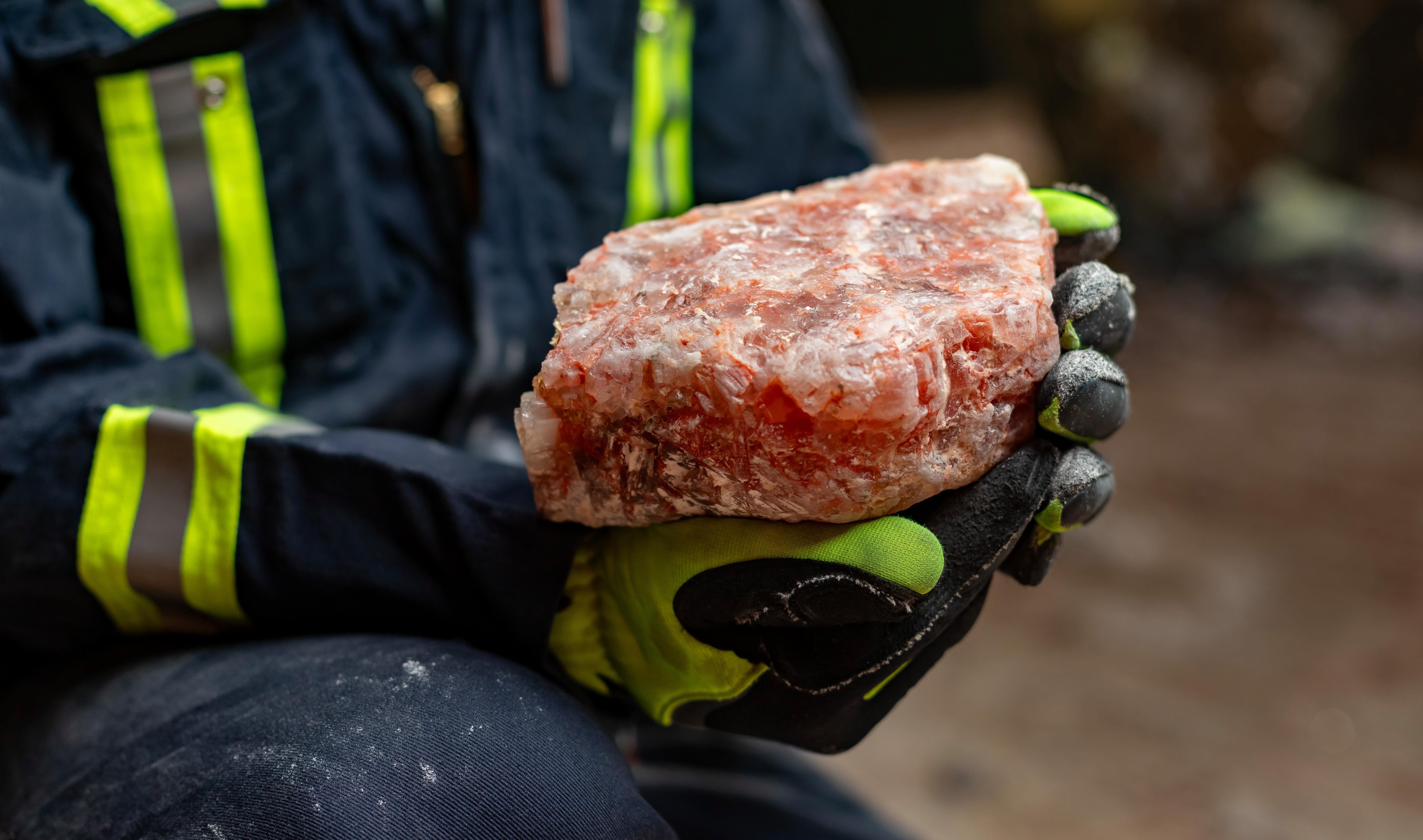
Pictured: Potash Sample at Nutrien Rocanville Potash Mine
Reading the rocks
Discovery was only the beginning.
Today, geologists continue to study the rock surrounding potash deposits, helping operations better understand underground conditions and plan mining activities safely and efficiently.

Pictured: Workers underground at Nutrien’s Cory Potash Mine
"The geologist's primary role is to test and understand where and why the rock is safe or unsafe for mining and communicate that to operations," says James.
Modern tools such as wireline logging, borehole radar, and 3D seismic imaging allow geologists to see beneath the surface in ways that weren't possible just a few decades ago.

Pictured: Worker at Nutrien Cory Potash Operation
"A lot of the new technology we use is in surface and mine exploration, where we test rock ahead of any potential mining," says James.
Even with advanced technology, geology still requires interpretation.
"A good geologist has a mind for science, visualization and interpretation, imagination and a little bit of artistry," says James.
Looking beneath the surface
One of Willow's favourite facts about Saskatchewan geology is also one of its most surprising.
"Saskatchewan had the perfect geological conditions, the right climate, and millions of years to produce the world-class potash deposits that are right here, a thousand meters beneath our feet and the soil," she says.

Pictured: Nutrien Allan Potash Operation
Today, Saskatchewan is synonymous with farmland, long stretches of highways, railroads, and communities big and small. It’s hard to picture that same landscape once covered by a warm inland sea filled with life, creating the conditions needed for one of the world's most significant potash resources to form.
Saskatchewan's potash remains a connection between an ancient world and a modern one. What began beneath a tropical sea now helps support agriculture around the world, a remarkable geological legacy and a reminder that the story of potash was already millions of years in the making before farmers first applied its nutrients to a field.
Related stories